Skip to content

About Aviation Impact Reduction through Climate Intelligence for Sustainable ATM.

The concept

AIRCLINS will develop and test the first climate-intelligent framework for aviation. It will enable the development of concepts, models and toolboxes for both the ATM and U-space ecosystems.

AIRCLINS is a SESAR 3 Joint Undertaking Exploratory Research project. It brings together research institutes and industry from Romania, Italy, Germany and Ireland, coordinated by INCAS, and is funded by the European Union under Grant No 101289570.

Challenges

Airliner leaving a contrail across a blue sky
Image: Pixabay

Non-CO₂ effects and contrails

Aviation’s growing contribution to climate change is not caused only by CO₂ emissions but also by other so-called non-CO₂ effects, such as nitrogen oxides, aerosols and contrails. Though, together, they account for significant climate impact, these effects are not well understood, regulated or integrated into operational decision-making when compared to CO₂ emissions.

Airliner on final approach under a heavy cloud layer
Image: Pixabay

Weather hazards disrupting aviation

Because of climate change, extreme weather events will continue to increasingly disrupt all branches of aviation, including the emerging market for drone operations.

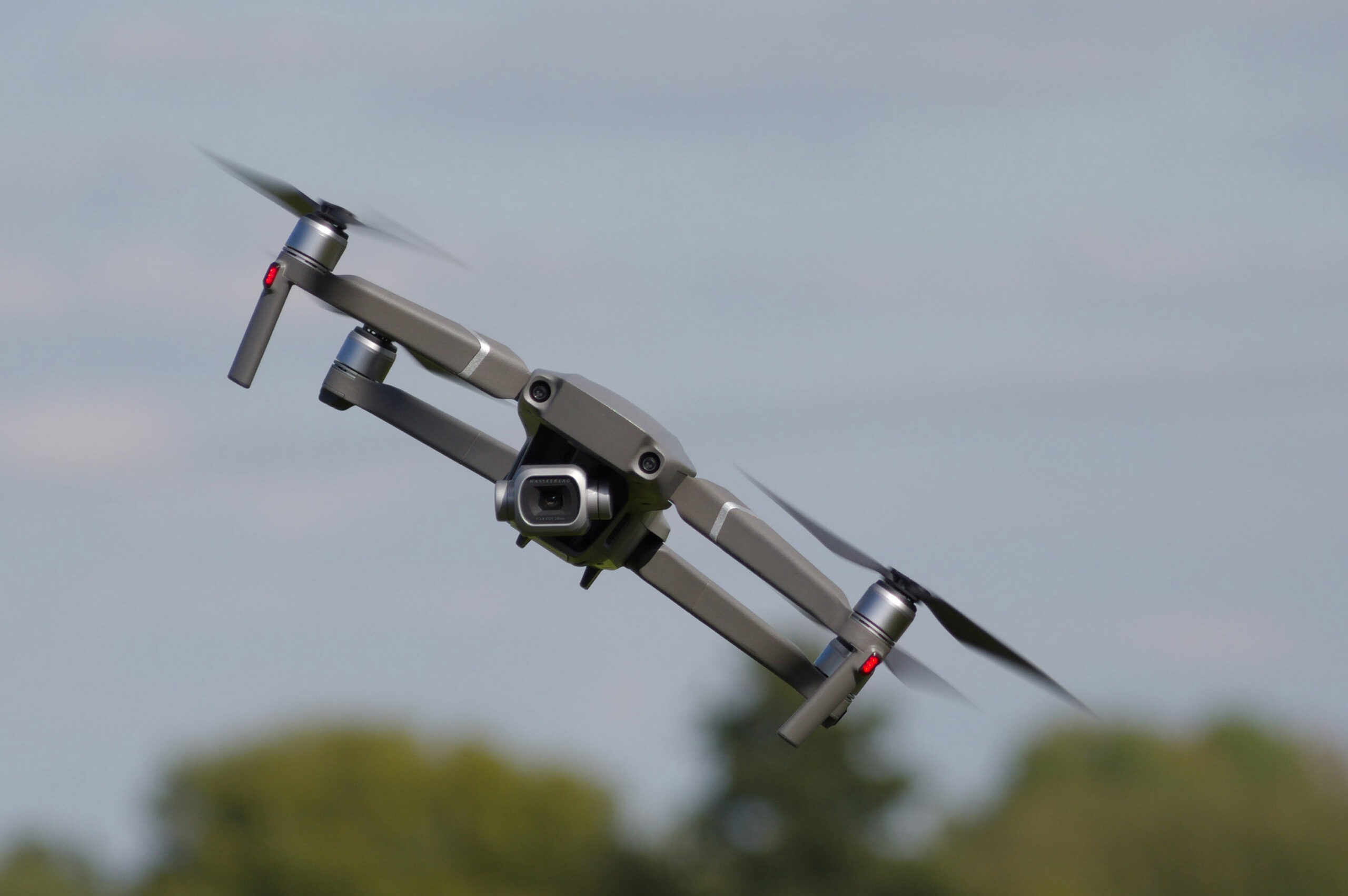
Small quadcopter drone hovering in flight
Image: Pixabay

Environmental assessment for drones

Unmanned flying vehicles ranging from small recreational quadcopters to multi-ton eVTOL platforms are expected to become ever-present, especially in urban areas. Frameworks are needed to effectively assess and mitigate their environmental impact both in terms of emissions and noise.

Approach

Two toolboxes, one for air traffic management and one for U-space, share a common integration framework. Select a module to read what it does.

ATM Climate Impact Toolbox

U-space Eco-Safety Toolbox

Wind Shear Resilience

ATM Climate Impact Toolbox

This feature of the ATM toolbox will provide an assessment of the impact of low-level wind shear (LLWS) hazard on aviation by delivering a decision-support tool which will perform Numerical Weather Prediction (NWP) using machine learning (ML) algorithms.

Climate-Aware Operations

ATM Climate Impact Toolbox

This stream of assessment will focus on advancing network-wide climate-aware planning regarding contrail avoidance and on developing metrics to reliably estimate emissions and their impact.

Common Integration Framework

Shared by both toolboxes

[Placeholder: description of the Common Integration Framework, about the same length as the other modules.]

Eco-Metrics Validation

U-space Eco-Safety Toolbox

This component will develop and specify novel environmental impact metrics to quantify noise and emissions from drone operations. A wide range of input data streams will be integrated into composite indices using multi-criteria decision analysis (MCDA).

Hazard-Cast Integrated Platform

U-space Eco-Safety Toolbox

The safety of drone operations against meteorological hazards (wind, precipitation, fog, etc.) will be analysed and conceptual models for detection, prediction and alerting will be developed in this module.

Methodology

1st component

Climate & Environmental Intelligence System

  1. S layer Scientific foundations
  2. D layer Data & AI integration
  3. M layer Environmental metrics
  4. V layer Simulation testing

2nd component

Integration & Communication Backbone

  • Modularitywith interoperable tools
  • Scalabilityin size and complexity
  • Cross-domainintegration

Objectives

  • Advance predictive modelling for atmospheric hazards
  • Develop composite environmental performance metrics
  • Deliver proof-of-concept decision-support toolboxes
  • Improve contrail prediction and non-CO₂ climate impact assessment

Expected results

  • Enhanced hazard awareness and resilience in ATM and U-space
  • Environmental sustainability and climate-neutral operations
  • Paving the way to integration in the Digital European Sky and operational safety
  • Setting the scene for standardisation and regulatory alignment in climate-intelligent ATM

The project has received funding from the SESAR 3 Joint Undertaking under the European Union’s Horizon Europe research and innovation programme under grant agreement No 101289570.

Funded by the European Union. Views and opinions expressed are however those of the author(s) only and do not necessarily reflect those of the European Union or SESAR 3 JU. Neither the European Union nor the SESAR 3 JU can be held responsible for them.